
Market Dominance Theory™
A New Way to Think About Competitive Advantage
After years of studying dominant businesses across industries and eras, a pattern becomes difficult to ignore. The companies that achieved dominance often did so by inventing or adopting powerful new ways to compete, operate, or create value. These became contributors to dominance. Sometimes a single contributor was powerful enough to produce extraordinary results.
What happens when an organization deliberately accumulates dozens of proven Contributors to Dominance?
Market Dominance Theory™ proposes that market leadership becomes increasingly predictable when organizations systematically accumulate Contributors to Dominance under specific conditions.
SystemWhy™ helps organizations build the conditions that make market leadership increasingly predictable.
8 minutes • 40 questions • Immediate results • No registration required
Why Organizations Fall Short of Their Potential


Most organizations have never explicitly identified the Contributors to Dominance they believe create market leadership, much less aligned around them.
As a result, leaders often operate from different assumptions about what creates growth.
The result is predictable:
competing priorities
unnecessary complexity
fragmented execution
unrealized potential
65+%
91%
Say alignment is critical.
14%
Believe they have it.
Struggle to execute it.
If Market Dominance Theory™ is correct, organizations need a way to accumulate contributors without accumulating complexity.
The Business Growth Engine™
The Business Growth Engine™ is the practical application of Market Dominance Theory™.
It helps organizations identify proven Contributors to Dominance, simplify them for broad adoption, align leaders around a common understanding of growth, connect decisions to the customer's lived experience, and integrate contributors so they reinforce one another.
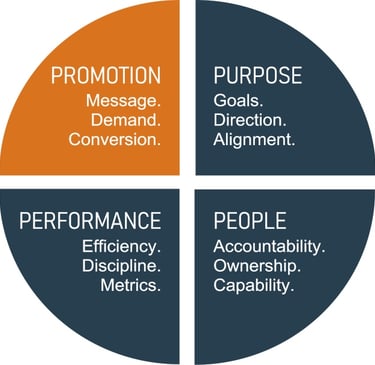
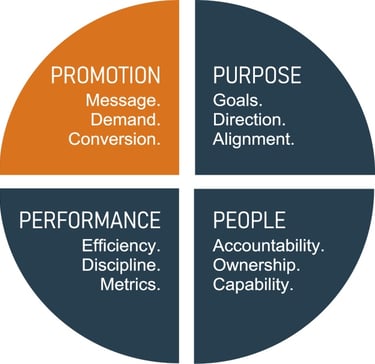
SystemWhy helps leaders who sense their organization is capable of far more to gain dominance and to feel proud of what the entire team has accomplished.
CEOs and executive teams who believe their organization is capable of far more.
Growth-oriented companies seeking market leadership rather than incremental improvement.
Organizations struggling with complexity, misalignment, or fragmented execution.
Leaders seeking compounding advantage rather than another isolated initiative.
What Changes
Organizations that systematically apply Contributors to Dominance begin to exhibit several observable characteristics:
Strategic decisions converge faster.
Execution becomes simpler.
Internal friction declines.
Alignment strengthens.
Competitive advantage becomes increasingly systematic.
Market leadership begins to feel less like luck and more like the logical outcome of doing the fundamentals exceptionally well. That predictability is rare and valuable.
Who This Is For
The assessment reveals which Contributors to Dominance are already present in your organization and where the greatest opportunities remain.
You’ll receive:
A baseline view of your team’s alignment on Contributors to Growth
Visibility into hidden friction points
Prioritization of areas that can create the most impact
Opportunity for a free 30-minute discussion tailored to your specific context and goals
Market Dominance Assessment™
8 minutes • 40 questions • Immediate results • No registration required